Oversized Sunglasses Sourcing: A $38,000 Lesson in MOQ, Polarized Lenses, and Total Cost
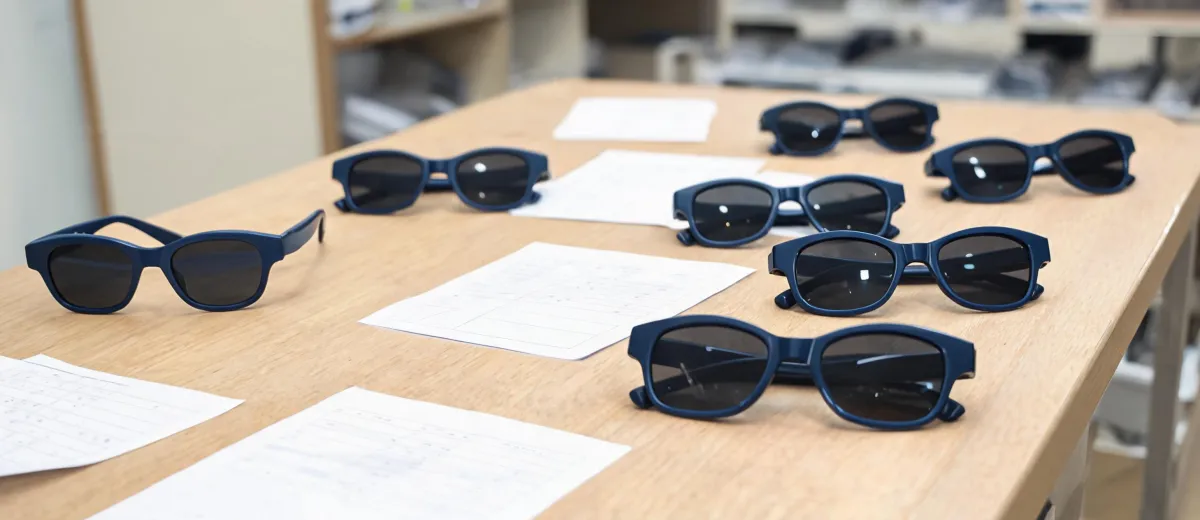
I still remember the spreadsheet tab: OS-Women-Q4. It was Q4 2023, and our retail buyer had asked for a bigger bet on oversized sunglasses for women. Not the generic oversize sunglasses we had been reselling from trading companies—she wanted polarized oversized sunglasses with a frame shape that actually fit a face, not just a trend photo.
I was the procurement manager at a 42-person eyewear distribution company. I had managed our accessory and sunglasses sourcing budget—about $260,000 annually—for six years. In that time I had negotiated with 50+ vendors. I thought I knew what I was doing.
I was about to learn that Oversized Sunglasses Sourcing is not a price exercise. It is a specification, MOQ, and documentation exercise.
The request that started it
The buyer sent me three reference photos and a one-line brief: oversized, women's, polarized, under $6 landed. That under $6 became my North Star. It shouldn't have.
I pulled our old supplier list and contacted nine vendors. Five were trading companies, two were factories that also sold direct, and two were smaller workshops I had found through a trade show. I asked for quotes on 1,000 units, mixed colors: black, tortoise, and a milky champagne that our buyer loved (and that I suspected would be a pain to color-match).
The quotes came back between $4.10 and $7.80 per unit. One low-quote trading company offered $4.60 with a free logo plate. Another factory quoted $5.40 and said the price included a basic polarized lens. A smaller workshop quoted $5.85 but asked a lot of questions: lens width, bridge, temple length, hinge type, packaging, test reports.
I almost went with the $4.60. Almost.
The quote sheet that lied
I built a TCO spreadsheet—total cost of ownership—because I had been burned before by free setup. I asked each vendor for a full cost breakdown: lens upgrade, logo plate, packaging, test reports, shipping, payment fees, and MOQ penalties.
The $4.60 quote became $6.32 landed. Hidden costs (like a polarized lens upcharge, a $180 custom logo plate, $0.35 per-unit packaging, a $250 test report, and DDP shipping) added up fast. The $5.40 factory quote landed at $5.95 because it included the lens and packaging. That's a 6% difference hidden in fine print—or rather, a 37% difference if you only looked at the initial unit price.
I want to say I caught it immediately. Actually, I caught it after two rounds of questions. The low-quote vendor kept saying no problem and then adding well, that part is extra.
What I missed the first time
I was so focused on unit price that I didn't ask for lens test reports. I assumed polarized meant polarized. That was naive. Polarized lenses can vary in tint consistency, curvature, and glare reduction. If you're selling to B2B buyers who then sell to consumers, you need documentation—not just a supplier's promise.
Per FTC advertising guidelines (ftc.gov), claims must be truthful, not misleading, and substantiated with evidence. That applies to polarized and UV-related claims, too. If you can't get a lab report, don't put the claim on your packaging or product page.
I also didn't understand how much oversized frame dimensions matter. An oversize sunglasses frame is not just bigger. Lens width, bridge fit, and temple length change how the product sits on a face. If the frame is too wide, it slides. If the lens is too tall, it hits cheeks. Our buyer wanted oversized sunglasses for women—not men's frames in pink.
The MOQ conversation nobody wanted
Here's where the story turned. I wanted to test 300 units before committing to 3,000. The low-quote vendor's MOQ was 3,000 per color. That meant 9,000 units across our three colors. I pushed back. They offered 2,000 per color. Still too much.
The $5.40 factory said 500 per color, then softened to 300 total if we accepted mixed packaging. The smaller workshop said yes to 300 units. Just 300. Our first order was around $1,755—I want to say $1,755, but don't quote me on the exact figure.
I remember feeling almost embarrassed to send such a small purchase order. In 2023, some vendors had treated our smaller orders like a waste of time. One sales rep actually stopped replying after I said 300 units. Another sent a quote with a $600 small order fee.
But the workshop treated it seriously. They sent lens samples. They photographed the hinge before assembly. They asked whether we wanted the temple logo embossed or printed. That $1,755 order got better communication than a $40,000 order I had placed years earlier.
So glad I didn't wire the 30% deposit to the low-quote vendor. Almost did to save $0.80 per unit. That would have locked $9,600 in inventory that didn't match our colors or our fit specs.
What the first 300 pairs taught us
The first 300 units arrived in five weeks—or rather, closer to six when you count the Chinese New Year slowdown. We checked 30 pairs in detail. The polarized lenses passed our basic glare test. The frame width was 148mm, which was slightly wider than the buyer wanted, but the temple length worked. We sold out in about six weeks.
That test order did two things. First, it proved demand for oversized sunglasses women actually wanted—not just what looked big on a website. Second, it gave us leverage. When we reordered 1,200 units, the workshop held the price. When we ordered 4,800 units the next season, we negotiated a 7% reduction and better packaging.
By mid-2024, polarized oversized sunglasses made up about 22% of our women's category. The small test order was not small. It was the whole pilot.
Granted, a 300-unit order costs more per unit. To be fair, low MOQ usually comes with a premium. But I get why buyers chase the lowest price—budgets are real. Still, I've come to believe that MOQ flexibility is often a better signal than a low quote.
How I source oversized sunglasses now
After tracking 60+ orders over six years in our procurement system, I changed my process. I still use a TCO spreadsheet, but I front-load the questions that matter.
- Define the frame, not just the trend. For oversized sunglasses for women, I specify lens width (usually 58–62mm), bridge, temple length, and hinge type. I ask for a fit sample if possible.
- Separate lens specs from frame specs. Polarized oversized sunglasses need a lens report: polarization efficiency, tint, and UV claim substantiation if the supplier makes one. If they can't provide it, I don't use the claim.
- Ask for all-in landed cost. I request a breakdown for lens upgrades, logo plates, packaging, test reports, shipping, payment fees, and MOQ thresholds. No free line items without a definition.
- Test small, then scale. A 300-unit trial is not a waste. It's cheaper than a 3,000-unit mistake. I'd rather pay a small-order premium than write off dead inventory.
- Watch the vendor's questions. When a supplier asks about hinge type, lens curvature, and packaging before quoting, that's usually a good sign. When they only ask how many, that's a warning.
Looking back, I should have asked for lens test reports before negotiating price. At the time, I assumed polarized was polarized. Now I know better.
Oversized Sunglasses Sourcing is not about finding the cheapest oversize sunglasses. It's about finding a supplier who understands that a women's oversized frame is a fit product, that polarized lenses need proof, and that a small first order can turn into a long-term B2B relationship. It took me about 18 months and 40+ vendor conversations to understand that. I'm still learning.