Oversized Sunglasses Sourcing Isn't a Unit-Price Problem
-
The quote looks simple. The risk isn't.
-
Argument 1: Oversized frames amplify every lens flaw
-
Argument 2: Polarized lenses are not a commodity
-
Argument 3: Women's oversized styles are fit and trend, not just size
-
Argument 4: B2B sourcing is about documentation and reorder consistency
-
What about the 'just buy direct' argument?
-
So here's my opinion, restated
-
Argument 1: Oversized frames amplify every lens flaw
The quote looks simple. The risk isn't.
If you're sourcing oversized sunglasses for a B2B program, the unit price is the least useful number on the quote.
I'm an office administrator for a 220-person company. I manage all promotional and safety product ordering—roughly $180,000 annually across 11 vendors. I report to both operations and finance. In 2024, I got pulled into sourcing 1,500 oversized polarized sunglasses for a summer client giveaway and a small retail pilot. I'm not a fashion buyer. But I've learned that sourcing oversized sunglasses is not like ordering branded pens.
Look, I get why people start with price. You have a budget, a quantity, and a deadline. You put out an RFQ, collect quotes, and compare. That's normal procurement. But for oversized sunglasses—especially polarized ones for women's styles—that approach misses the two things that actually cause problems: lens quality and compliance documentation.
Argument 1: Oversized frames amplify every lens flaw
Here's the thing: an oversized frame isn't just a bigger version of a standard frame. The lens area is larger, the curvature is different, and any distortion or uneven tint becomes more noticeable. You can't just scale up a 55mm lens to 65mm and expect the same optical performance.
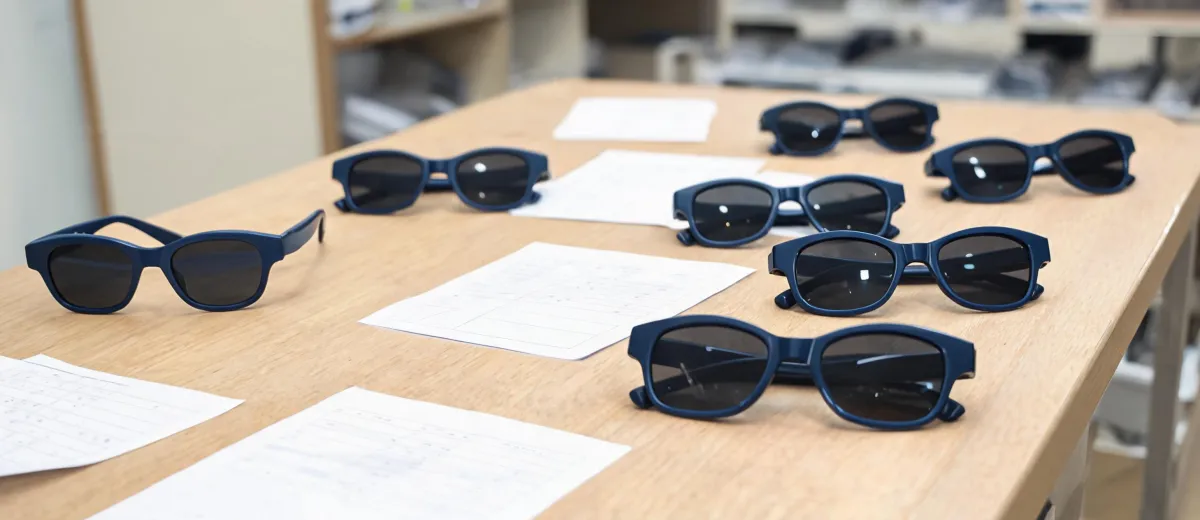
It's tempting to think you can just compare unit prices. But identical specs from different vendors can result in wildly different outcomes. I learned this in Q1 2024 when we ordered samples from three suppliers. Two of them quoted nearly the same price. One pair had a slight wave in the lens that made the floor look curved when you looked down. Not ideal. The other had a clean lens but the hinge felt loose after two weeks.
According to FDA regulations (21 CFR 886.5850), sunglasses are regulated as Class I medical devices and must meet impact-resistance and labeling requirements. The Vision Council also notes that UV protection is a key consumer purchase driver. If you're selling or gifting sunglasses with a UV claim, you need documentation—not just a supplier saying UV400 over chat. I won't claim 100% UV protection from any supplier without test reports. That's a red line for me.
Argument 2: Polarized lenses are not a commodity
Polarized oversized sunglasses are especially tricky. Polarization reduces glare, but the quality of the polarizing film and the lamination process varies a lot. Cheap polarized lenses can delaminate, haze, or create a rainbow effect on car windshields. For a B2B program, that's not a minor cosmetic issue. It's a return, a complaint, or a refund.
In our 2024 vendor consolidation project, I had to narrow 9 vendors down to 3 for a different category. The numbers said go with Vendor B—15% cheaper with similar specs. My gut said stick with Vendor A. Went with my gut. Later learned B had reliability issues on lens coating that I hadn't discovered in my initial research. That experience made me suspicious of similar specs when it comes to optics.
For polarized oversized sunglasses, I now ask for:
- Polarization efficiency test reports (not just a sticker)
- UV400 transmission data
- Impact resistance documentation
- Lens thickness and material details
- Sample pairs from the actual production line, not a golden sample
If a supplier can't provide those, I don't care how good the price is. The risk is too high.
Argument 3: Women's oversized styles are fit and trend, not just size
Oversized sunglasses for women are a different beast. The frame shape, temple length, bridge width, and lens height all affect how the glasses sit on different face shapes. A supplier that only makes men's oversized frames and scales them up will produce something that looks oversized but fits poorly. And poor fit means the glasses slide down, press on the cheeks, or let light in from the sides.
We tested 4 vendors in Q3 2024 and found pricing variations of 40% for identical specifications. But the cheapest quote also had the least consistent fit. The nose pads were too narrow for half our test group. The arms were too short for others. That's not a spec you can fix with a lower price.
So when I evaluate oversized sunglasses for women, I look for suppliers who actually specialize in that category. They know the difference between oversize and oversized fit. They have multiple temple lengths and nose pad options. They can show you real customer reviews or fit feedback. Without that, you're guessing.
Argument 4: B2B sourcing is about documentation and reorder consistency
Here's the thing: a one-off purchase for a photo shoot is different from a B2B sourcing program. If you're ordering 50 pairs for a single event, you can accept more risk. If you're ordering 1,500 pairs, putting your logo on them, and handing them to clients, you need invoices, packing lists, compliance certificates, and a supplier who can repeat the same quality in 6 months.
I learned this the hard way in 2020 when I took over purchasing. I found a great price from a new vendor—$1,200 cheaper than our regular supplier. Ordered 300 units. They couldn't provide a proper invoice (handwritten receipt only). Finance rejected the expense report. I ate the cost out of the department budget. Now I verify invoicing capability before placing any order.
With sunglasses, the same logic applies. You need a supplier who can provide CE/UKCA documentation for the EU/UK, FDA compliance for the US, and consistent batch quality. If they can't, the savings are fake. You'll pay for it in returns, delays, or a failed audit.
What about the 'just buy direct' argument?
You might be thinking: 'This is overthinking. I can buy oversized sunglasses from a marketplace, save 20%, and move on.' And for some cases, you're right.
If you're ordering fewer than 100 pairs, don't need custom branding, and you're not making UV or polarized claims, then a marketplace or local wholesaler might be the most efficient choice. A specialist B2B sourcing partner may not be cost-effective at that scale. I'll be the first to say it: don't hire a specialist if your situation doesn't need one.
But if you're dealing with larger volumes, custom logos, polarized lenses, women's fit, or compliance documentation, the calculus changes. The cost of one bad batch is higher than the savings from the cheapest quote. In those cases, a specialist who focuses on oversized sunglasses sourcing—like Oversized Sunglasses Sourcing—can be worth a conversation. Not because they're the only option, but because they understand the category's specific risks.
I had 2 hours to decide on a rush order in 2024. Normally I'd get multiple quotes and test samples, but there was no time. Went with our usual vendor based on trust alone. In hindsight, I should have pushed back on the timeline. But with the CEO waiting, I made the call with incomplete information. It worked out, but I wouldn't recommend it. Time pressure is how you end up with 1,500 pairs of sunglasses that nobody wants to wear.
So here's my opinion, restated
Sourcing oversized sunglasses is not a unit-price problem. It's a lens-quality, fit, and documentation problem. If you start with price, you'll end up paying for it later. If you start with supplier qualification—especially for polarized lenses and women's oversized frames—you'll make a better decision.
I recommend a specialist B2B sourcing partner for one situation: when you need consistent, documented, scalable oversized sunglasses with polarized options and women's fit. I don't recommend it for another: when you're ordering a small, low-stakes batch and don't need compliance paperwork. Being honest about that distinction is how you avoid a bad sourcing decision.
Look, I'm not saying the cheapest option is always bad. I'm saying it's riskier. And in B2B sourcing, risk has a way of showing up on the invoice.
Prices and supplier quotes referenced are based on my own 2024–2025 sourcing experience. Verify current pricing, MOQs, and compliance requirements with your supplier and official sources like FDA.gov and The Vision Council.