Oversized Sunglasses Sourcing: A Scenario-Based Guide for B2B Buyers
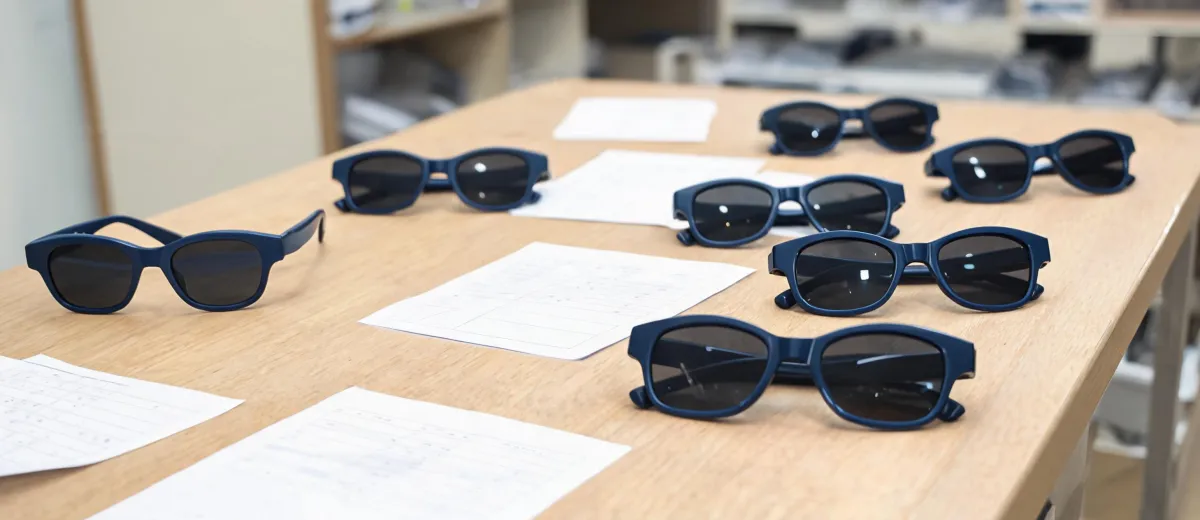
If you're sourcing oversized sunglasses for your company, you've probably noticed there's no single "best" supplier. The right approach depends on your order volume, branding needs, and target market. I'm an office administrator for a 150-person company. I manage all promotional product ordering—roughly $50,000 annually across 12 vendors. I report to both operations and finance. Over the past five years, I've handled procurement for corporate gifts, event giveaways, and small-batch retail. I've seen three main scenarios play out. Here they are, along with what I've learned from each.
The Three Sourcing Scenarios for Oversized Sunglasses
Before you request a single quote, figure out which scenario you're in. The advice that works for custom branding will waste money on a quick-turnaround event order. And the cheapest per-unit price often hides costs that don't show up on the invoice. Let me walk through each scenario.
Scenario A: You Need Custom Branding (OEM/ODM) for Promotional Campaigns or Private Label
This is the most complex scenario. You're ordering oversized sunglasses with your logo, custom colors, or unique packaging. MOQs usually start around 300–500 units. Lead times can stretch to 45–60 days. The common advice is to chase the lowest quote. I've learned that's wrong.
What matters more is the factory's specialization in oversized frames. Oversized sunglasses have larger lenses and thicker frames, which means hinge quality and frame material matter more. A factory that mostly produces standard-size sunglasses may struggle with warping or misaligned lenses on oversized styles.
"They warned me about checking frame material certifications. I didn't listen. The first batch of custom oversized sunglasses came back with frames that warped in summer heat. We lost $3,200 and had to reorder."
That was a reverse validation moment I won't forget. Now I always ask for material test reports—especially for acetate or injected propionate frames. If a supplier can't provide them, I move on.
Another counterintuitive point: sometimes a slightly higher MOQ from a specialized factory saves money. Why? Because defect rates drop. I compared two suppliers in Q2 2024. Supplier X quoted $12 per unit at 500 MOQ. Supplier Y quoted $14 per unit at 800 MOQ. We ordered 500 from Supplier X and ended up with a 7% defect rate—reordering 35 units at full price plus shipping. Supplier Y's higher MOQ would have cost less per usable unit. Not intuitive, but there it is.
For custom branding, verify the factory's experience with oversized frames. Ask for photos of similar past projects. Request a pre-production sample—and actually test the hinges and lens alignment. (Should mention: samples often take 2–3 weeks to arrive, so build that into your timeline.)
Scenario B: You Need Ready-Stock Wholesale for Quick Turnaround
Maybe you need 200–500 units for a trade show giveaway or a seasonal pop-up. You don't need custom branding. You need inventory on hand and fast shipping. The usual advice is to compare as many wholesalers as possible. But when the clock is ticking, that's a trap.
Had two weeks to get 500 units for a trade show. Normally I'd get five quotes and compare specs. There was no time. I went with a local distributor who had stock on hand. Cost 15% more per unit, but we made the deadline. In hindsight, I should have started the process a month earlier. But with the CEO waiting, I did the best I could with available information.
Here's the counterintuitive part: paying for air freight can be cheaper than waiting for sea freight if the event date is fixed. A $0.80 per-unit sea freight saving means nothing if the shipment arrives two weeks late. I've seen teams try to save $200 on shipping and then spend $1,500 on rush reprints for the event program because the sunglasses didn't show up.
For ready-stock sourcing, prioritize inventory depth and shipping speed over per-unit price. Ask the supplier: "How many units of this exact SKU do you have in stock right now?" and "What's the cut-off time for same-day dispatch?" Oh, and always verify the sunglasses actually match the photos. I've received "oversized" styles that were barely larger than standard frames.
Scenario C: You Need High-End Polarized Oversized Sunglasses for Premium Retail
This scenario is about quality, not just price. Your customers are buying oversized sunglasses for women who care about lens clarity, UV protection, and frame finish. Polarized lenses are often essential—but not for the reason most people think.
According to the World Health Organization, UV radiation can cause cataracts and other eye damage. So verifying lens protection is critical. Ask for UV400 test reports. Don't assume "polarized" means quality. I've seen fake polarized lenses that failed a simple polarization test.
"They warned me about fake polarized lenses. I didn't listen. The 'polarized' sunglasses we ordered failed a simple polarization test. We had to refund customers and lost a retail account."
That mistake cost us $1,800 in refunds and a lot more in reputation. Now I always request a test report from a recognized lab—or at least a demonstration video showing the polarization effect.
Here's another counterintuitive angle: for fashion-forward women's markets, non-polarized lenses can sometimes be more profitable. Why? Because non-polarized lenses allow brighter colors and gradient tints that sell well in trendy oversized styles. Polarized lenses often come in darker, more uniform tints. If your target customer buys oversized sunglasses for women as a fashion accessory rather than for driving or water sports, a non-polarized option at a lower price point might sell faster. I'm not saying polarized is bad—it's essential for premium positioning. But don't assume every oversized style needs it.
For premium polarized oversized sunglasses, focus on lens quality and frame material. Acetate frames feel more luxurious than injected plastic. Metal hinges should be sturdy. And always verify that the supplier can provide consistent quality across reorders. Based on quotes we collected in January 2025, wholesale oversized polarized sunglasses range from $10–30 per unit depending on frame material and lens quality. Prices as of January 2025; verify current rates.
How to Identify Your Scenario
Ask yourself three questions:
- Do you need custom branding (logo, colors, packaging)? If yes, you're in Scenario A. Expect higher MOQs and longer lead times.
- Is your deadline within 30 days? If yes, you're in Scenario B. Prioritize stock availability and shipping speed over price.
- Is your target retail price above $40 per unit? If yes, you're likely in Scenario C. Focus on lens certification and frame finish.
If you're still unsure, start by writing down your non-negotiables: deadline, budget, and quality threshold. Then match to the scenario. For example, if your deadline is fixed and your budget is tight, Scenario B is your only realistic path—pay the premium for speed. If you have flexibility on timing but need custom logo, Scenario A gives you more control.
The industry has evolved. Five years ago, sourcing oversized sunglasses meant flying to trade shows or relying on a local distributor. Now, you can find specialized suppliers online, but the verification work hasn't gone away. The fundamentals—checking specifications, requesting samples, verifying claims—still matter. The tools have changed. The principles haven't.
One last thing: whatever scenario you're in, get everything in writing. I once had a supplier verbally promise UV400 protection and then deny it when the shipment arrived without test reports. That cost us $2,400 in rejected expenses. Now I verify invoicing capability and test report availability before placing any order. A lesson learned the hard way.